
Share Edward L. Deci's obituary with others.
Invite friends and family to read the obituary and add memories.
Stay updated
We'll notify you when service details or new memories are added.
You're now following this obituary
We'll email you when there are updates.
Select your format and elements to print

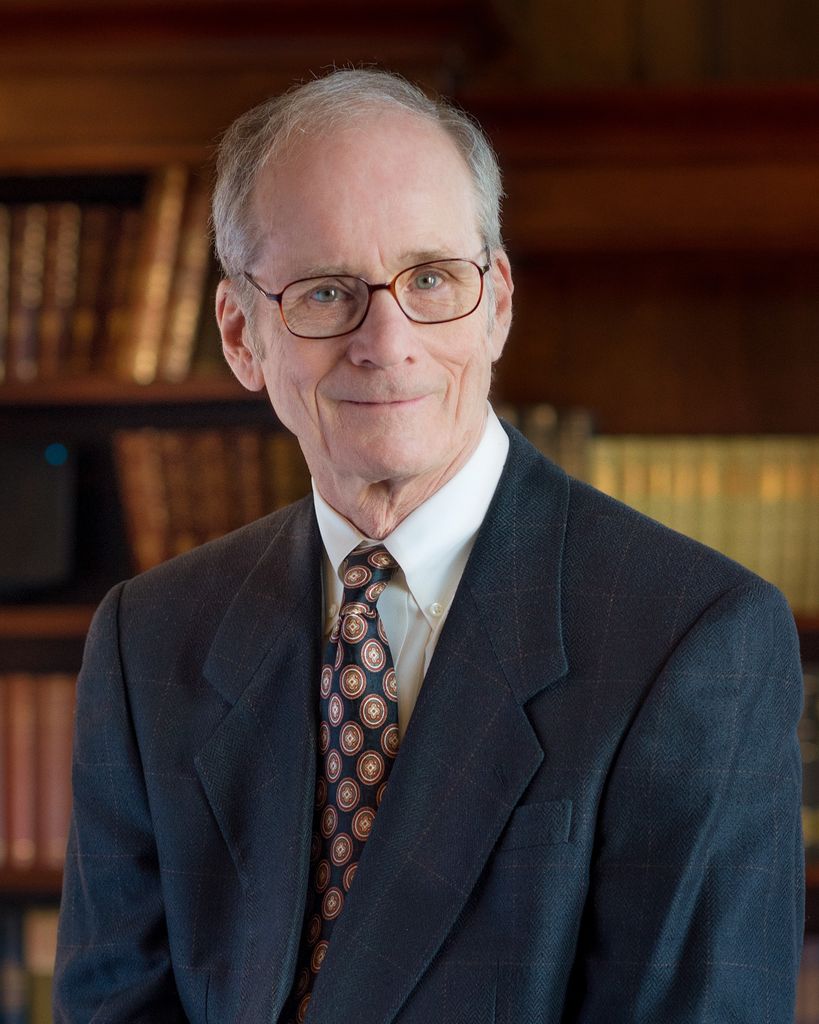


Edward L. Deci
Oct 14, 1942 — Feb 14, 2026
Rochester
Dr. Edward L. Deci, pioneering psychologist who transformed thinking around human motivation, remembered
Edward Deci, a professor emeritus of psychology at the University of Rochester whose pioneering work transformed how human motivation is understood and shaped generations of scholars, practitioners, and students worldwide, died in February at the age of 83.
He was best known for his work on self-determination theory, which he co-founded with his University colleague Richard Ryan. The theory became one of the most influential frameworks on human motivation and wellness in contemporary psychology, with its reach extending far beyond academic journals.
At a time when behaviorist approaches dominated the field of psychology—emphasizing rewards and punishments as primary drivers of behavior—Deci helped advance a different view: humans are naturally inclined toward curiosity, growth, and connection, and their progress in and mastery of their pursuits are necessary for them to flourish.
His 1971 seminal paper on extrinsic rewards on intrinsic motivation spawned decades of collaborative research with Ryan that evolved into self-determination theory. Today, the theory is among the most cited in the history of psychology, and is now widely applied in education, health care, psychotherapy, organizational life, and public policy, influencing how people are taught, treated, motivated, and supported across diverse settings worldwide.
“They identified three key human needs—our need for competence, our need for autonomy, and our need for relatedness, meaning personal connection—and they posited that intrinsic motivation can be sustained only when we feel those needs are being satisfied,” author Paul Tough once wrote in The Atlantic in explaining how the theory was being used to teach children resilience.
Deci spent his entire academic career at the University of Rochester, joining the Department of Psychology in 1970 and later becoming the Helen F. and Fred H. Gowen Professor in the Social Sciences before retiring in 2017. Over more than four decades, he helped establish the University as a global center for the study of human motivation.
Beginning in the early 1980s, Deci and Ryan co-led the Human Motivation Program at the University, which became a formative intellectual home for many scholars who would go on to shape the field themselves. Central to the program was a weekly motivation research group, where rigorous thinking, open dialogue, and mentorship were defining features.
Over the course of his career, Deci authored and co-authored hundreds of publications and several influential books, including Intrinsic Motivation and Self-Determination in Human Behavior (1985), Why We Do What We Do (1991), and Self-Determination Theory: Basic Psychological Needs in Motivation, Development, and Wellness (2017).
Beyond his scholarship, Deci was widely known as a generous mentor, advisor, and friend. Former students and colleagues often described his patience, warmth, and gentle challenge—his ability to encourage others to seek clarity and truth while respecting their lived experience. His legacy lives on not only in the reach of his ideas, but also in the countless scholars, clinicians, educators, and practitioners whose work—and lives—were shaped by his guidance.
“Ed had a profound passion for understanding human motivation and for putting that knowledge into practice,” says Ryan, his longtime collaborator. “He was remarkably generative as a scholar, but what mattered just as much to him was supporting younger scholars—helping them think clearly, work honestly, and grow into themselves.”
In 2015, Deci and Ryan founded the Center for Self-Determination Theory, a nonprofit organization that advances the philosophy, research, and practices of self-determination theory.
Outside of academic life, Deci found joy and meaning on Monhegan Island, Maine, where he spent his summers and played a long-standing role in the Monhegan Museum of Art and History and its artistic community. For decades, he served as either director of the museum or president of the Monhegan Museum Association, or both, helping to steward the cultural life of the island alongside his work in psychology. His passion reflected the same values that guided his scientific work: curiosity, care, and a deep respect for human expression.
Deci is survived by his sister Shirley Jensen, brother Charles Deci Jr., their children and grandchildren, and by a global community of colleagues, students, and friends whose lives were shaped, directly or indirectly, by his ideas and character.
A Remembrance and Gathering Details A rememberance and gathering will be held on Saturday, March 14, from 1:00–3:00 p.m. (ET) at the University of Rochester Interfaith Chapel (Address: 1045 Wilson Blvd., Rochester, New York 14627). Memorial Contribution
For those who have asked how they might honor Ed’s life and legacy, contributions may be made to: · The Center for Self-Determination Theory (CSDT): https://selfdeterminationtheory.org
Service Schedule
Past Services
Memorial Gathering
Saturday, March 14, 2026
1:00 - 3:00 pm (Eastern time)
University of Rochester Interfaith Chapel
Guestbook
Visits: 1526
This site is protected by reCAPTCHA and the
Google Privacy Policy and Terms of Service apply.
Service map data © OpenStreetMap contributors